
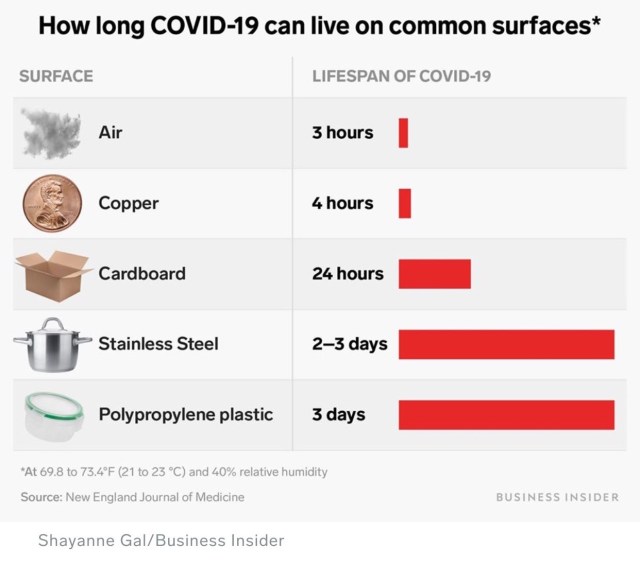
Coronavirus can stay on different surfaces for an appreciable length of time. The diagram below reveals how long the virus can stay on copper, cardboard, stainless steel, Polypropylene plastic, and in air. It has been shown that people can become infected when they merely touch surfaces that host the virus and then touching their eyes or faces (viral particles can enter through either human eyes or noses).
It is advisable that you wash your hands after touching any of these 20 objects:
You may not have the opportunity of knowing who had touched any of the following objects before you. If he/she has been infected by COVID-19, chances are that you will also be infected. They include:
- Door handles and lift buttons
- Shopping cart handles
- Restaurant menus
- Paper money
- Shared materials such as a pen, pencil, or even a stapler
- Pets or any other animal
- Screens of cell phones, computers, PDAs, etc.
- Kitchen sponges
- Soap Dispensers
- Any object at the hospital that people can touch
- ATM machine buttons
- Handrails at the bus terminals, train stations, etc
- Utensils
- Anything that other people can touch at the public space
- Taxi doors’ handles
- Windows’ Sills
- Taps
- Cutlery
- Pressing iron
- Clippers
Instead of being panicked, these are the sensible steps you can take to protect yourself and your loved ones:
- Wash your hands often with soap and water for at least 20 seconds.
- If water is not available, you can use a hand sanitizer that has at least 60% alcohol.
- Avoid touching your eyes, nose, and mouth with hands you haven’t washed.
- Avoid close contact with people who are sick. If the cases of Coronavirus infections are rising in your community, practice distancing yourself from people in a crowd or at the public places. You can choose to avoid gatherings of people altogether.
- Wear a facemask.
- Clean and disinfect your surroundings.
Discover more from Medlandz
Subscribe to get the latest posts sent to your email.
